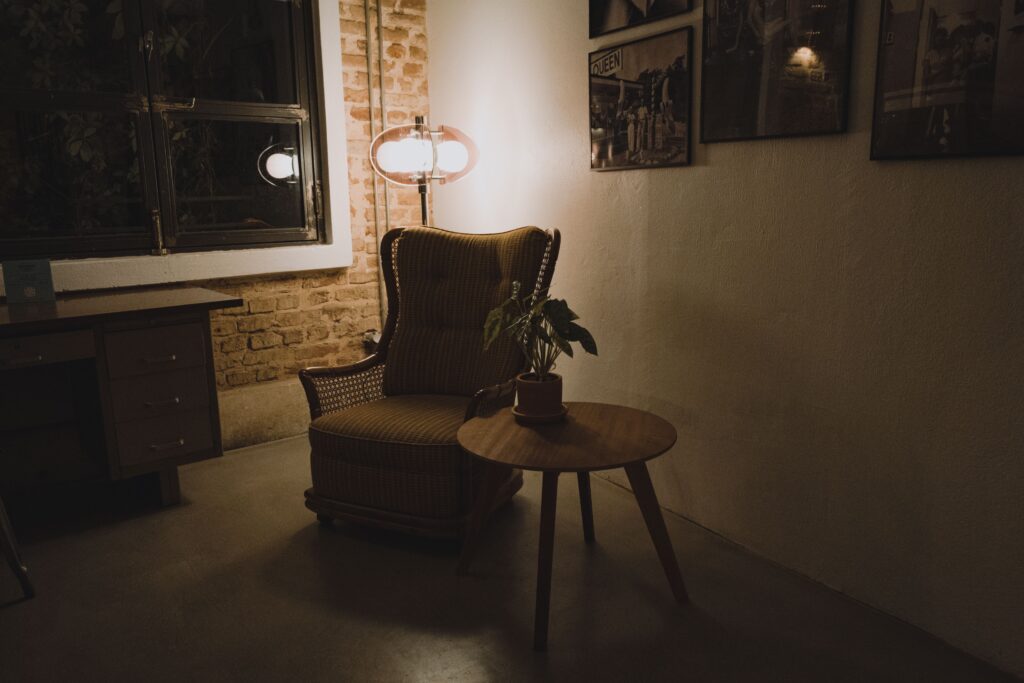
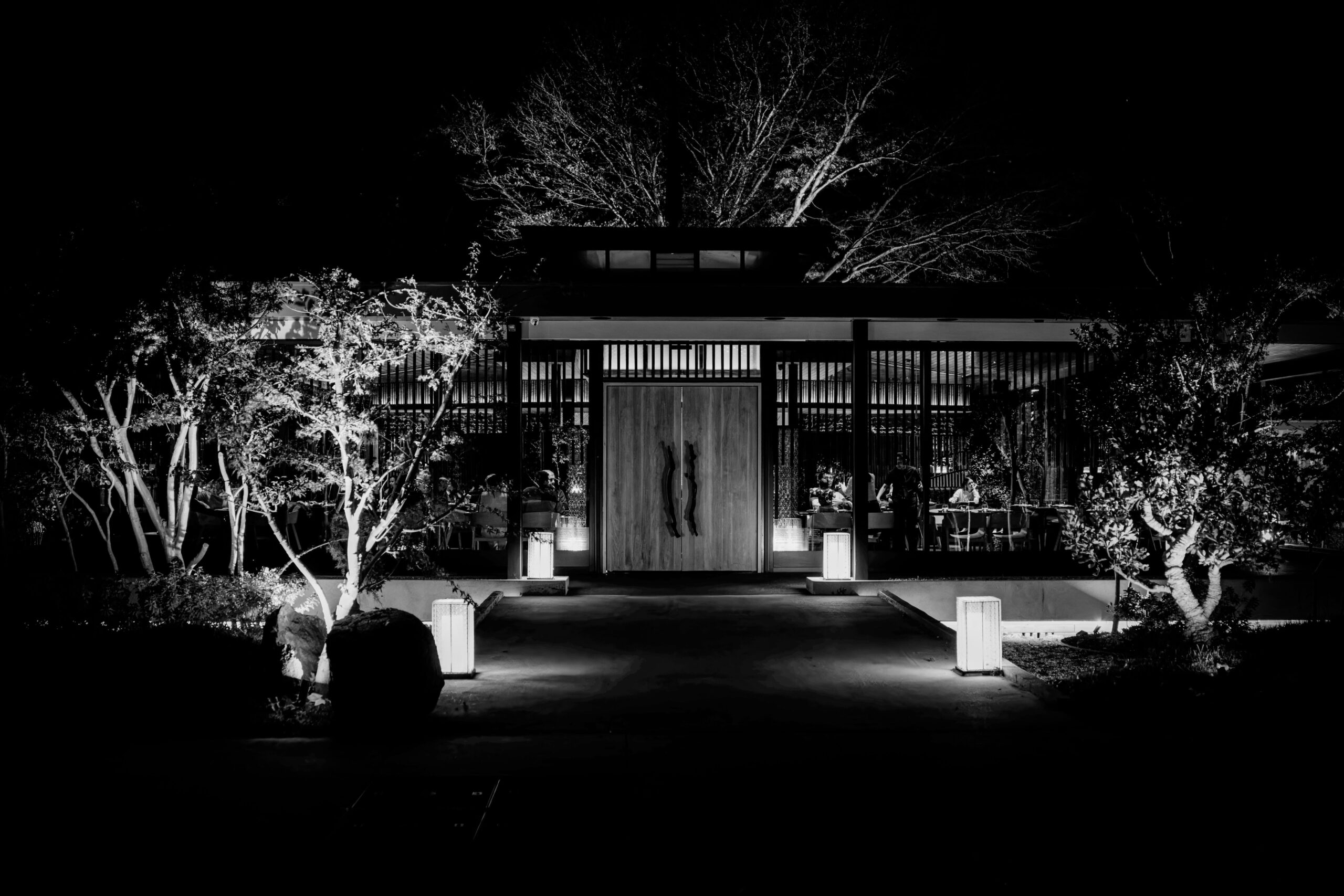
Lighting shapes the room long before you notice the fixture.
You can spend a fortune on finishes and still end up with a room that feels wrong. You can also take a fairly ordinary space, light it well, and completely change the way it feels. That is why we think about lighting early. Lighting changes how you see the ceiling, the walls, the materials, the furniture, and even the size of the room itself. Sometimes the best lighting decision is adding a fixture. Sometimes it is deciding not to light something.
Bright Isn’t the Goal
More light does not automatically mean better light. A restaurant, office, kitchen, and warehouse all need different things, and even within one room the lighting may need to change from one area to the next.
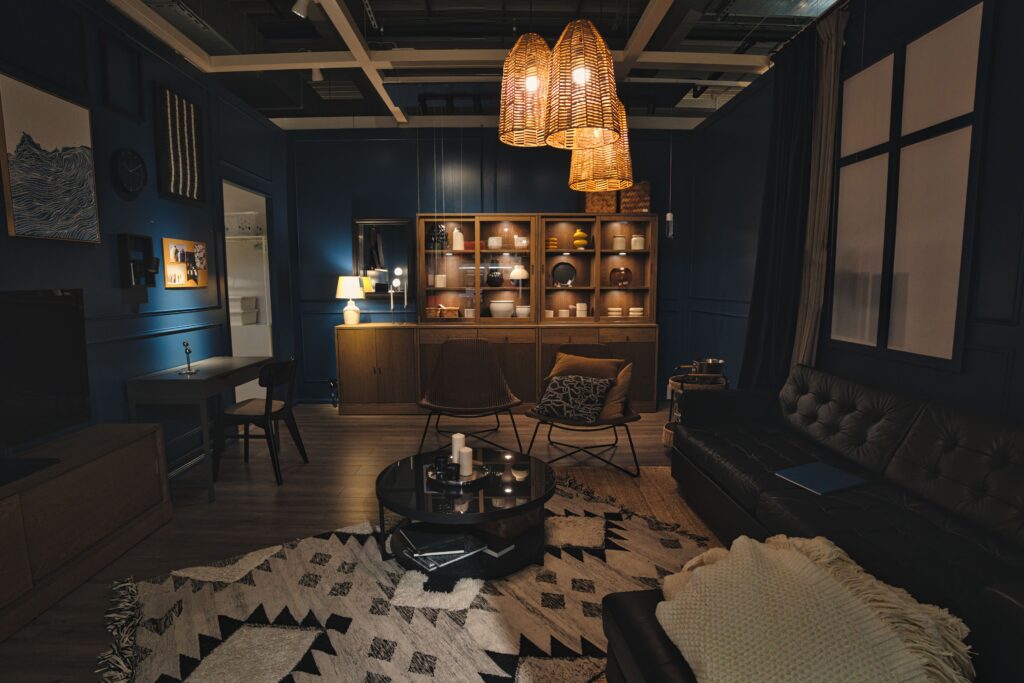
A table can feel warm and intimate while the aisle beside it feels open and comfortable. A textured wall can become a feature, while a ceiling quietly disappears into the background. Good lighting is about deciding what deserves attention and what does not.
Good lighting isn’t about illuminating everything. It’s about choosing what matters.
Sometimes We Turn Off the Sun
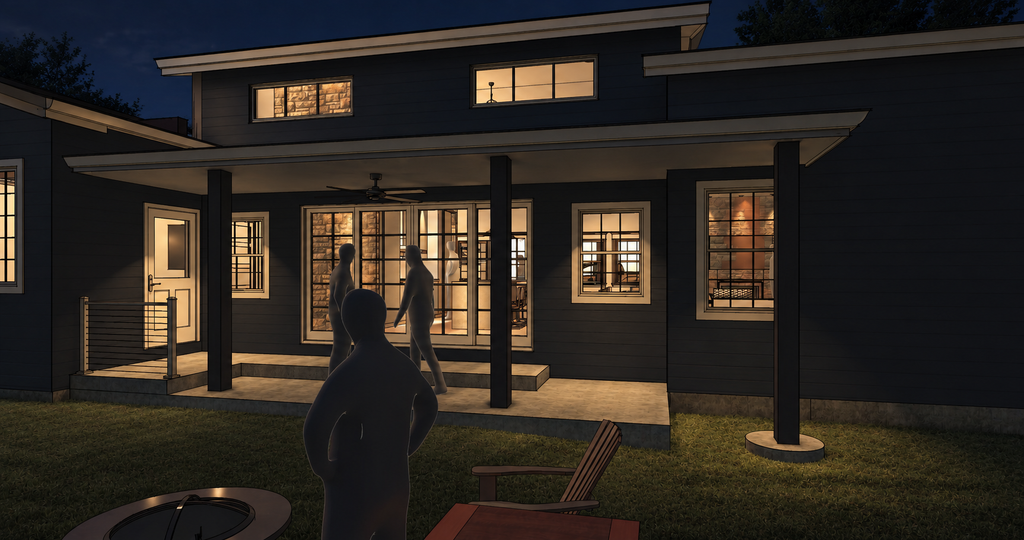
We spend a lot of time focused on light during design. When we start placing fixtures, one of the first things we often do is turn off the sun and work through the building virtually at night.
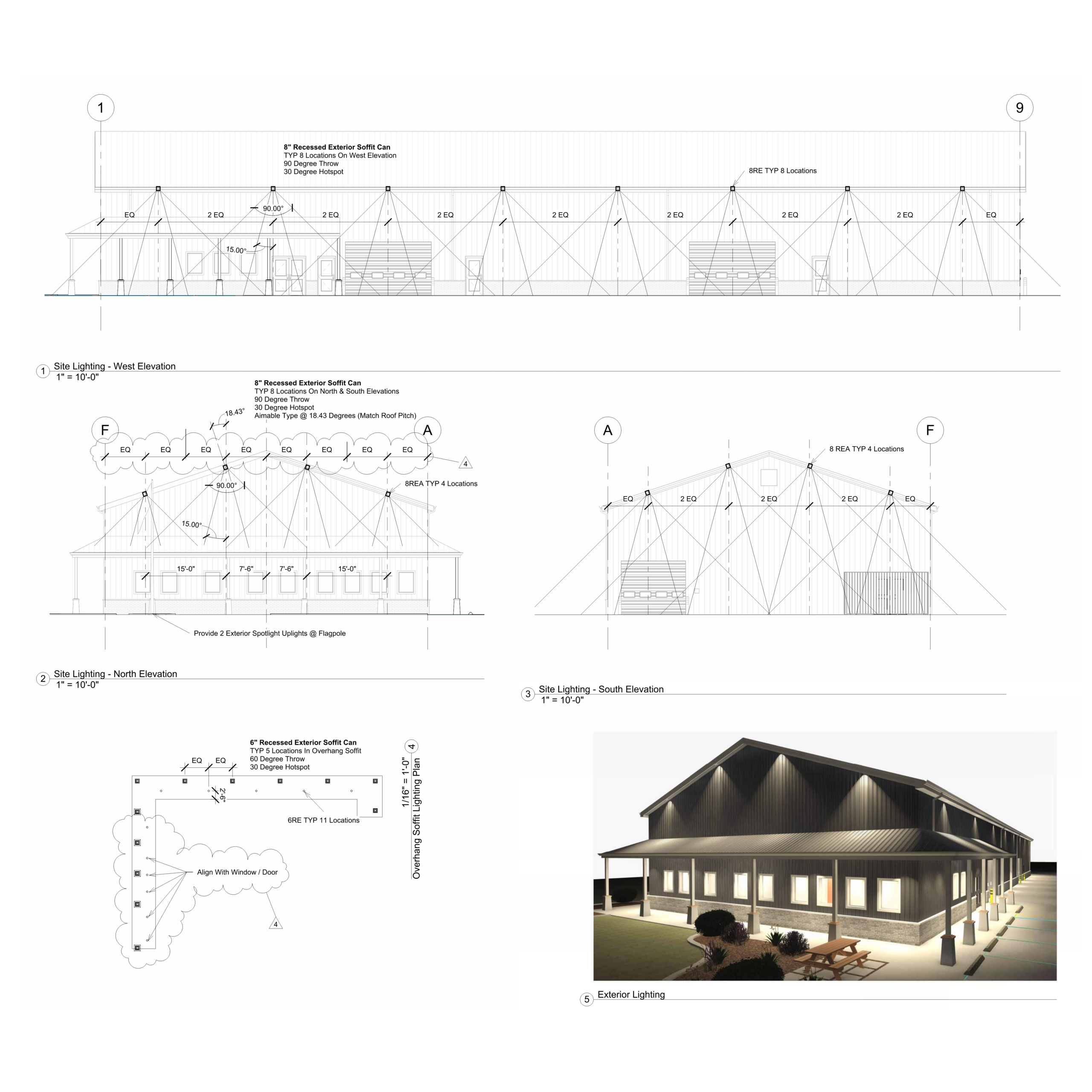
Without daylight masking the results, we can see what the fixtures are actually doing. We can adjust their location, direction, intensity, beam angle, and color temperature, then move through the model from the same places people will eventually experience the finished space.
It lets us answer questions before construction starts. Is that wall getting enough light? Is the seating too bright? Are we creating glare? Would moving a fixture two feet make the room feel better?
Those are easy changes in a model. They become much more expensive once the electricians are on site.
Good Lighting Doesn’t Have to Be Expensive
Good lighting design is not necessarily about expensive fixtures. Often, it is about using ordinary fixtures more intentionally: where they go, what they point toward, how bright they are, and what they leave in shadow.
Especially on renovations and budget-conscious projects, a few thoughtful lighting decisions can sometimes change a space more than another layer of expensive finishes.
Design the Experience You Want
Floor plans tell us where the walls go. Elevations tell us what they look like. Lighting helps us understand what it might actually feel like to stand in the room.
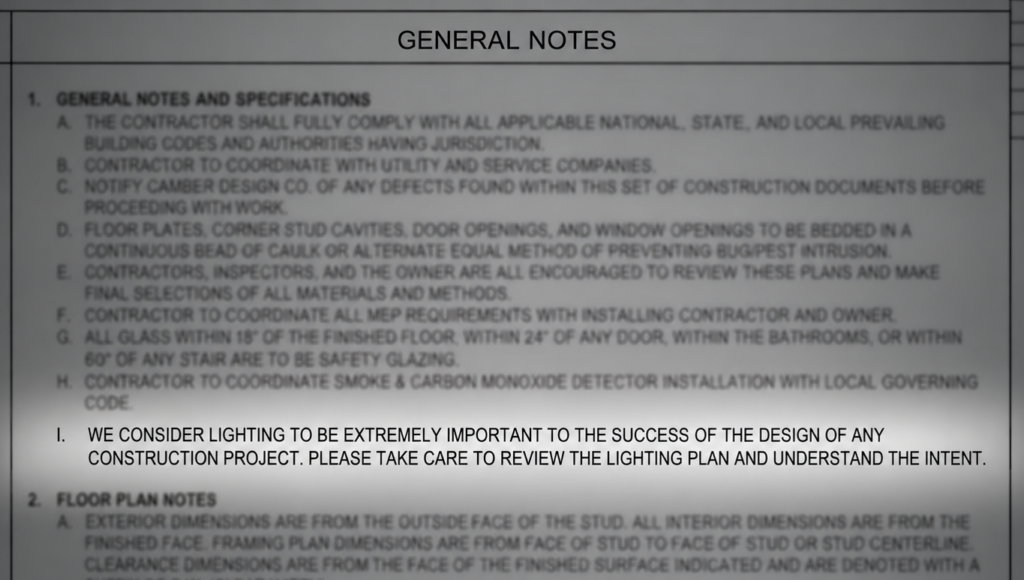
That is why we treat it as part of the design process.
Because when the sun goes down and the building is being used, the lighting is the architecture you see.